
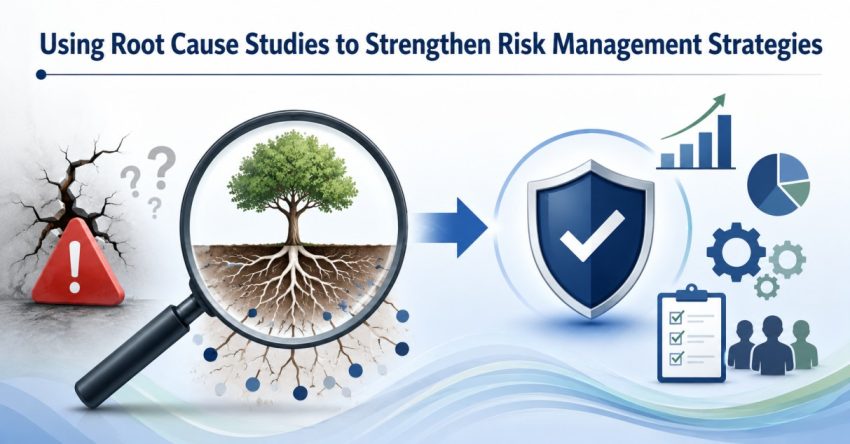
In modern organizations, there are various forms of risks that need to be addressed to ensure continuous operation in the future. Among these risks are operational problems, accidents, issues related to product or service quality, lack of adherence to policies and procedures, among others. Although some organizations try to resolve their problems in a way that they see fit, without knowing the real reason for which those issues occur, it becomes difficult to ensure sustainable development of the company. Therefore, root cause studies are essential for such situations.
Root Cause Studies Defined
A root cause study is an approach aimed at identifying the reasons for undesirable events. In other words, it is not about solving the problem itself but trying to discover the root cause of that issue. There are several approaches that are usually employed when analyzing the causes of incidents or failures. These include, for example, Five Whys, Fishbone Diagram, Fault Tree Analysis, and Failure Mode and Effects Analysis (FMEA).
Improved Risk Identification
Another positive aspect of root cause studies is that they help in improving risk identification. Many companies pay attention to obvious risks but ignore the hidden ones which are associated with the processes, systems or structure of an organization. In other words, root cause studies help in identifying such risks by analyzing incidents in depth.
For instance, the company may think that there was a production delay due to equipment breakdown. However, the root cause study may show that the real causes are lack of proper maintenance planning, insufficient training of operators and problems with managing spare parts. Therefore, organizations will be able to identify bigger risks related to many processes.
Helping to Develop Pre-emptive Risk Management
It is not enough to respond to incidents when it comes to effective risk management; organizations should take preventive actions. Root cause studies provide organizations with the insights allowing them to do so. When they understand what causes failures, they will be able to develop better controls and monitoring systems.
Enhancing Compliance and Safety
Compliance with regulations and safety at work are important aspects in many industries. Compliance is often achieved through investigating incidents and taking appropriate action. Root cause studies aid compliance in providing an approach to address risks associated with safety and operations.
Organizations gain useful insight into improving safety and achieving compliance with industry norms by applying root cause analysis to accidents, close calls, or non-compliance. This helps minimize risk of legal troubles, ensures safety of the workforce, and builds credibility among stakeholders.
Promoting Continuous Improvement
Root cause analysis has the greatest benefit for risk management when it is applied as part of the continuous improvement process. Learning from mistakes and applying the lessons allows organizations to improve their practices and decision making.
Through the consistent investigation of incidents and implementing changes in response, organizations develop resilience and ability to adapt. It ultimately results in improved performance and better handling of risks.
Conclusion
Conducting a root cause study is an excellent way to enhance risk management processes within any organization. Through conducting a root cause study, one is able to understand the real causes of various problems, and this helps to put forward solutions that will be beneficial in the future. There are many ways through which conducting a root cause study can help an organization enhance its risk management process.
Also Read: The Impact of Installation Conditions on Cable Current Carrying Capacity