
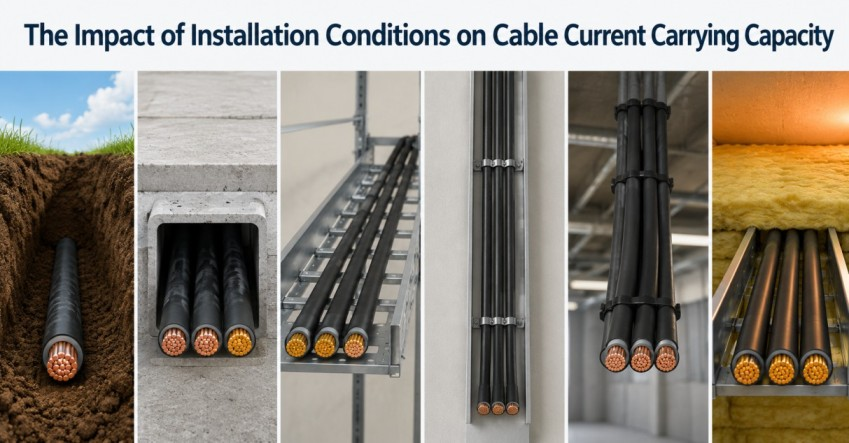
Cable current carrying capacity is one of the key factors in designing electrical systems. It denotes the maximum capacity of electrical current that a cable can safely conduct without overheating above its permissible temperatures. Even though the size of the cable, material used for the conductor and the type of insulation used are key factors when it comes to determining the cable current carrying capacity, it is equally important to have proper installation conditions.
Understanding Cable Current Carrying Capacity
As the electrical current passes through the cable, some heat energy is generated owing to the resistance of the conductor. In order for the cable to work properly, this heat should be efficiently released to the environment. Therefore, cable current carrying capacity is related to the heat dissipation process of the cable.
Effect of Ambient Temperature
Ambient temperature is one of the most significant factors that influence the installation process. Cables installed in hot ambient temperatures possess less ability to exchange heat with the surrounding air. Consequently, they reach their maximum operating temperature faster, which reduces the current-carrying capacity of the cables.
Cables installed at industrial facilities, in places that are under the influence of direct sunlight, or inside equipment rooms need to be derated for increased ambient temperatures. Neglecting this factor may lead to overheating and cable failure.
Effect of Installation Method
The installation method also influences the current carrying capacity of the cables. Cables installed in free air enjoy better conditions of heat exchange because air is capable of moving freely around them. Cables installed in conduit, trays, duct, or enclosed areas face limited airflow and therefore have worse conditions of heat exchange.
Underground cable installations face other challenges because of the thermal characteristics of the surrounding soil. Loose soil and dry soil hinder heat dissipation and thus affect the current carrying capacity of the cable.
Impact of Cables Grouping
In many cases, several cables are put up side-by-side in industries and commercial structures. Although such an arrangement helps in saving space, it may have adverse effects on the performance of cables. In case cables are bundled, the amount of heat developed by each one will add up to increase the overall temperature of the installation location.
The phenomenon will decrease the current carrying capacity of the cables in the bundle. Electrical regulations usually include the grouping factor correction for safety reasons in such situations.
Impact of Ventilation and Surrounding Conditions
Another important factor that affects cable temperature is ventilation. Good ventilation helps heat to be dissipated easily, hence higher current carrying capacity. In poorly ventilated areas like tunnels, cable basements, and electrical rooms, heat can accumulate causing overheating problems.
Other environmental factors like humidity and chemical exposure as well as direct sun heat can also affect insulation performance.
The Importance of Derating Calculations
Since installation conditions may differ from one case to another, the standard current-carrying capacity values will not always apply. Engineers use derating factors to make adjustments to cable ratings in respect of the actual installation environment by taking into consideration various elements like temperature, grouping, installation methods, soil conditions, and others.
Derating will help ensure safe temperatures for cables and reliable operations of the electrical systems.
Conclusion
Installation conditions play an important role in determining the current-carrying capacity of cables as well as affecting the performance of the entire electrical system. Elements like ambient temperatures, installation methods, cable grouping, ventilation, and the environment affect the efficiency of heat dissipation of cables.
Also Read: How Protection Relay Coordination Studies Reduce Equipment Damage and Downtime