
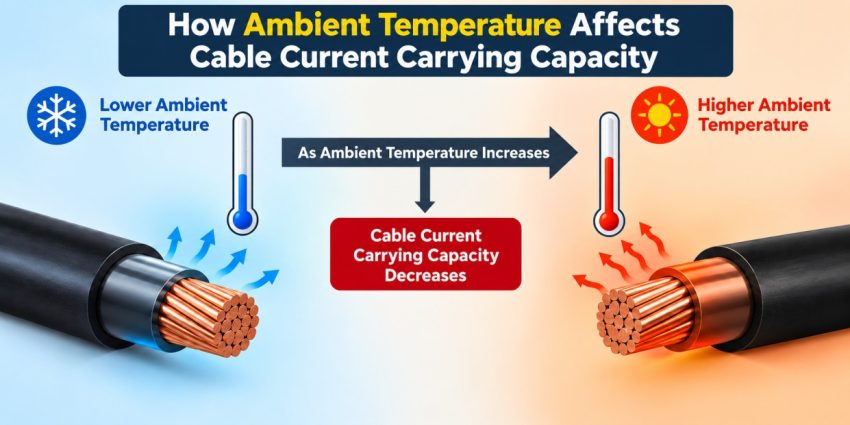
Electrical cables are meant to conduct a certain amount of current under specific operating conditions. However, their performance is temperature dependent and when temperature changes, their performance will change. Ambient temperature and cable current carrying capacity are closely related and it is necessary to use the appropriate cables for industrial plants and electrical installations and in commercial buildings. Failure to abide by temperature guidelines can result in over-heating, insulation damage and shortened cable life. Hence, the installation environment together with the electrical load should be taken into account by the engineers to provide safe and reliable power distribution.
Cable Installation – Understanding Ambient Temperature
Ambient temperature is the temperature of the medium (air) around a cable in which it is installed. The application can expose cables to indoor conditions, outdoors, underground or high temperature industrial areas.
Typical cable current carrying capacity is indicated for a fixed ambient temperature when the cable is used. If running conditions vary from this reference, the current might have to be adjusted. The adjustment is done to ensure that the conductor and its insulation do not reach limits of their operating temperatures.
High temperatures will affect the performance of cables
An electrical cable with current in it heats up because of the electrical resistance of the conductor. This heat must be dissipated to the surroundings in order to keep the operating temperature of the cable within safe limits.
Heat dissipation is decreased if ambient temperature is already high. As a result, the conductor will be able to attain its maximum allowable temperature with a reduced current.
Cables can be influenced in a number of ways by high ambient temperatures:
Lower current ratings: The cable will have to carry less current to operate within the specified temperature range.
Insulation aging: The insulation material ages because of overheating over a period of time due to too high temperatures that may be dangerous.
Lower reliability: Overheating results in lower reliability of cables and leads to increased maintenance.
Temperature Derating Factors and their role
The factors of temperature derating are used to calculate the maximum allowable current when the ambient temperature is not the same as the temperature under which the cable is rated.
For instance, a cable bound for a certain amount of cable current at a particular environment temperature would be required to operate at a lower current in a hotter environment. The derating factor is dependent on the type of insulation material used on the cable, the installation conditions and the relevant electrical standards.
Before finalizing the choice of cables, engineers should refer to the manufacturer’s data and relevant standards (if applicable) IEC 60364-5-52. They should also take other derating factors into account such as cable grouping and installation method as these can also limit heat dissipation.
Choosing Cables for High-Temperatures
Selecting cables in hot environments requires more than simply checking on the current rating of the cables. The following actions can be taken to ensure safety and better performance:
- Survey the location: Find out the temperature of the surrounding area where the cable will be installed and check on the heat sources around the cable route.
- Select the insulation rating: Choose the cables according to the expected operating temperature.
- Select proper derating factors: Select the derating factors using the standard and the manufacturer’s guide.
- Consideration of the installation conditions: Consider the ventilation of the cables, the grouping of the cables, and other installation conditions that influence the dissipation of the heat.
- Final consideration of the selected cable: Find out whether the selected cable can accommodate the anticipated load in the operating environment.
Conclusion
The temperature of the surroundings, or ambient temperature, is a significant factor in determining the amount of current an electrical cable can safely pass. With a higher temperature, there is less thermal margin and cable size and derating become key to ensuring the cable does not overheat or cause early insulation failure. Environmental factors, insulation properties, installation methods, and standards are assessed to make informed decisions about cable selection. When designing cable current carrying capacity in the real working environment, it helps to enhance the electrical safety, system reliability and stability of industrial and commercial facilities in the long run.
Also Read: A Substation Failure Is Rarely Just One Problem: The Value of Root Cause Studies
1 thought on “How Ambient Temperature Affects Cable Current Carrying Capacity”