
Modern-day businesses require complex systems in order to be productive, safe and efficient in their operations. The failure of such systems may lead to high costs of downtimes, safety problems and operational challenges. With organizations aiming to make their systems more reliable and less risky, fault tree analysis is a vital tool in their arsenal for finding out and fixing problems before they arise.
Fault tree analysis allows an organization to gain insight into the various events and conditions that may lead to a critical failure in the system, if it is used to help determine the risk. This allows the decision makers to take preventive measures and boost the overall performance of the system.
Understanding Fault tree analysis
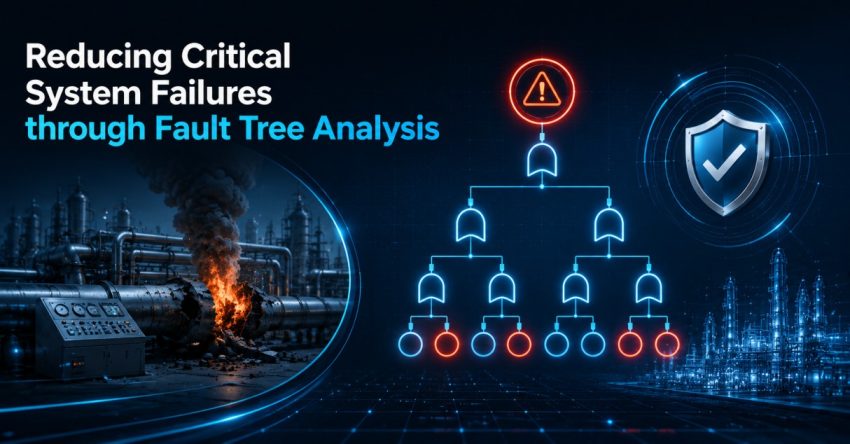
Fault tree analysis is a systematic approach to root cause analysis of an undesirable event in a system. The processes starts with a failure event, called vthe “top event” and then looks backward to identify the combinations of factors that might be responsible for that event.
In the fault tree analysis approach, relationships between equipment failures, human error, environment and operation problems are visually represented by logical diagrams. This is a structured assessment that provides a better understanding of system vulnerabilities for an organization.
Identifying Potential Failure Paths
The key benefits of fault tree analysis are that it can reveal failure modes that are not apparent in normal operation and that are concealed.
In any system of complexity, there can be many components to it that are interconnected. One small problem can create a series of problems that leads to a big failure. These relationships can be identified in organizations using Fault tree analysis and weaknesses can be corrected before they turn into issues.
Improving System Reliability
For organizations which rely on continuous operations, reliability is a key objective. Unforeseen failures can cause production delays, affect service quality and lead to higher maintenance expenses.
Using fault tree analysis, engineers are able to determine what risks need attention and act on them to improve the system through measures such as replacement of equipment, changes to the processes involved or implementing further safety mechanisms.
Supporting Preventive Maintenance
Preventive maintenance is an important factor in minimizing system failures. But the best maintenance is done on those parts that affect the performance most.
Use fault tree analysis to determine areas of high risk equipment and failure points in the organization. This information can help maintenance teams to prioritise resources and plan maintenance tasks on a risk basis rather than only according to a fixed schedule.
Enhancing Workplace Safety
Many critical failures of the systems can lead to severe safety issues for workers and neighboring communities. Failures of equipment, electrical installations, and processes can lead to accidents that could have been avoided by taking a pro-active approach to risk assessment.
A comprehensive fault tree analysis can help safety professionals see where hazardous situations can occur in a sequence of events. Choosing to take on these challenges can assist in ensuring workplace safety and reducing the chances of any accidents occurring.
Supporting Better Decision-Making
These results on fault tree analysis allow companies to have a better idea when making decisions relating to equipment purchase, maintenance, safety improvements and daily operations. In other words, efforts can be directed toward those that would make the biggest difference with regards to reliability and risk management.
Conclusion
It is important for risk management to be proactive and organized in order to minimize any risk of system failure. Fault tree analysis give businesses the tools needed to identify the problem areas, understand their weaknesses and make systems safer and more reliable, while providing assistance with preventative maintenance and improving workplace safety. Having knowledge on what needs to be done in order to prevent problems and failures will ensure organizations are protected against disturbances and will help to keep operations running smoothly.
Also Read: Understanding Safety Standards through an Arc Flash Study