
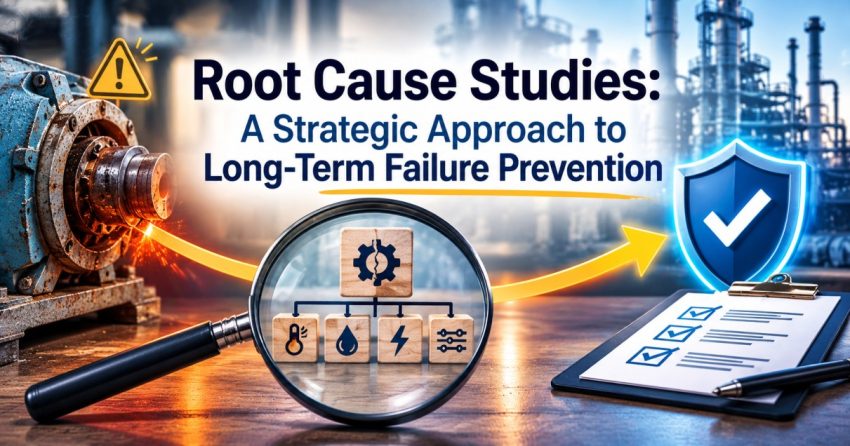
Technical malfunctions, disruptions to operations, and frequent technical problems could influence productivity, safety, and performance of an organization. Although a quick fix would allow the organization to resume its activity, sometimes it does not solve the very cause of the problem. A more efficient solution would be to determine the reason for such a technical malfunction. Root Cause Studies come in handy in such cases.
Role of Root Cause Studies in Failure Prevention
Improved System Reliability
With the identification of the root cause, companies can adopt corrective actions that improve the reliability of the system. Such actions may include modification of equipment, enhancement of maintenance practices, and improvement in design or operations.
Safety and Compliance
Recurrent failure of electrical or mechanical systems creates safety issues. Identification of the factors that contribute to such failures allows engineers to mitigate the risk of an accident. In addition, root cause analysis helps to comply with the engineering standards and safety guidelines.
A Structured Approach to Long-Term Solutions
Gathering and Assessing Evidence
A good investigation process requires reliable information to be gathered. Engineers analyze failure reports, inspections, operating parameters, testing results, and past history. This information is helpful in understanding what took place, when it took place, and what conditions existed during the development of the failure.
Determining Correction Measures
Once the most likely cause has been determined, engineers may suggest effective corrective actions. These corrective actions should be aimed at addressing the cause and not the symptoms.
Creating a Culture of Preventive Engineering
Turning Failures into Learning Opportunities
Fails provide lessons that could be learned from system problems. By analyzing fails regularly, companies will be able to detect any recurring patterns and apply them to future engineering design, maintenance, and operations.
Helping to Implement Changes Continuously
Root Cause Studies may become a significant component of the overall reliability and asset management strategy. The results will be useful for making future decisions regarding other engineering projects.
Conclusion
Reliability over the long term cannot be achieved merely by reacting to failures once they have occurred. Rather, it is necessary to understand what caused the problem and then act in such a way as to prevent the recurrence of the problem. The implementation of Root Cause Studies makes this possible, thus allowing an organization to achieve a higher level of reliability and efficiency..
Also Read: The Role of Electrical Engineering Services in Modern Industrial Projects
1 thought on “Root Cause Studies: A Strategic Approach to Long-Term Failure Prevention”