
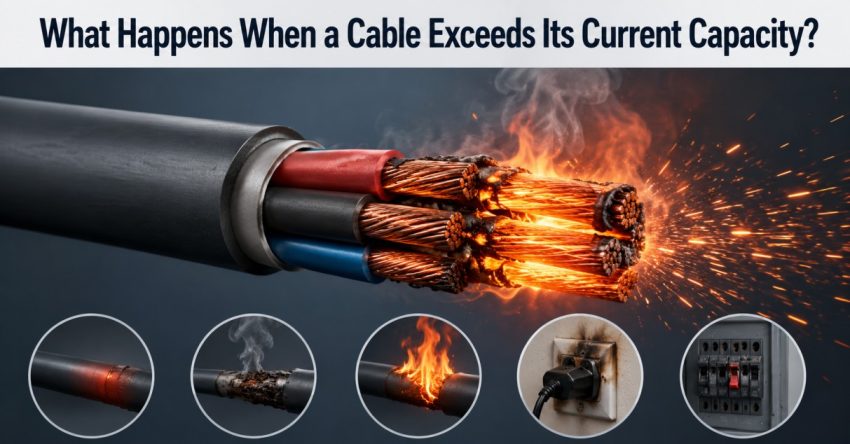
Electric cables are engineered to transmit a particular quantity of electric currents without complications while under normal conditions. The value at which a particular electric cable can operate at without any difficulty is called the cable current carrying capacity or ampacity of the cable and is determined by several factors like the size of conductors used, insulation materials used and temperature among others. It is important to note the potential dangers associated with the overloading of a cable.
Excessive Heat Generation
The first problem that would occur as a result of the loading of an electric cable beyond its capability is production of excessive amounts of heat. Electrical current generates some amounts of heat when passing through the conductor due to resistance.
As the electrical current exceeds the limit set by the particular cable, the heat produced would increase substantially. If the heat cannot be dissipated, then the temperature rises further. Overheating leads to damage of the insulation material covering the conductor and reduces its lifespan.
Overload Problems
The insulation of cables can endure certain levels of temperatures. Whenever these temperatures are repeatedly breached, the condition of the insulation material starts to degrade. It may end up becoming fragile, cracking, melting, losing dielectric strength or any other problem, thus raising the possibility of an electrical malfunction.
Damage of the insulation layer can lead to short circuits, ground faults or even interphase faults that lead to electrical failure. In worse case scenarios, exposed conductors may touch each other or even touch grounding, thus resulting in fault conditions that have to be repaired right away.
Fire Hazards
Another serious consequence of cable overloading is the increased chances of fire outbreaks. Heat that arises due to overloading of the conductors may ignite nearby combustible materials or burn the insulation layer. Fire hazards are often spread quite fast and may cause a lot of property damage, business disruption or pose risks to occupants.
Appropriate selection of cables and good cable current carrying capacity is some of the steps required to reduce the risk of such problems.
Decreased System Efficiency
Excessive current flow through the cable also influences the general efficiency of the whole electrical distribution system. The higher the current in the cable is, the greater will be the power losses in the conductor resulting in heat loss rather than electricity delivered to the electrical appliances.
This might cause voltage drops that will decrease performance of equipment and will increase expenses for operating the system. Electrical devices may operate unstably, inefficiently, or even stop due to voltage drops below the permissible level. Cable current carrying capacity is very important in order to ensure the efficient operation of the system.
Cable Overload Prevention
Prevention of cable overload starts with proper design of an electrical system. The load currents are calculated and conductor sizes are chosen to comply with all necessary standards and to offer a sufficient margin of safety.
Inspection, load monitoring and maintenance will also help to detect overloaded cables before any damage takes place. With the development of facilities and addition of new equipment, it is recommended to review the electrical system and make sure that the existing cables are still capable of handling the load.
A proper coordination of protective devices increases safety and prevents overloaded circuits from overheating.
Conclusion
Consequences associated with the exceeding of cable current carrying capacity include heating of cables, damage to the insulator of cables, malfunctioning of electrical equipment, poor efficiency of electricity use, and even fire risks. Although the mentioned issues can become apparent only after some time, they can prove quite expensive and even dangerous in the long run. Therefore, appropriate cable choice, load calculation, monitoring of systems, and using protection are of vital importance.
Also Read: Arc Flash Study vs. Short Circuit Study: Key Differences
1 thought on “What Happens When a Cable Exceeds Its Current Capacity?”