
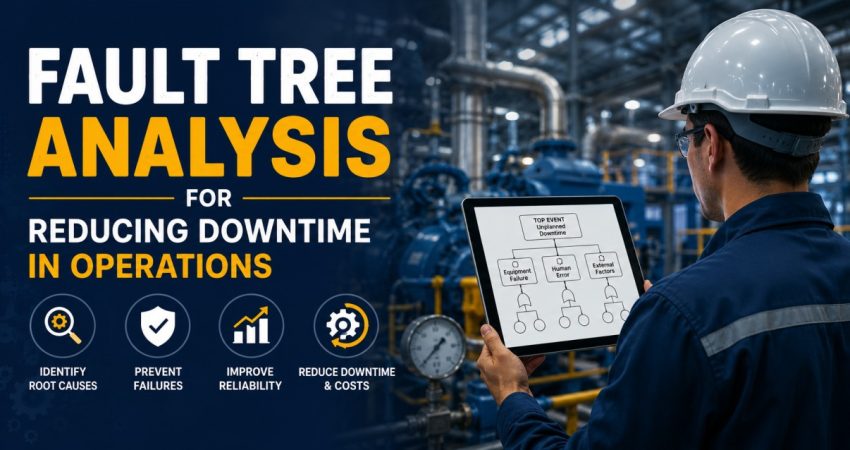
In every business, any downtime in the operations may cause delays, loss of money, and inefficiencies. No matter whether it is a manufacturing facility, power plant, or a service-based operation, a small glitch would interfere with the whole process. This is where fault tree analysis comes in handy. It assists the organizations to determine the causes of failures and put proactive measures in order to ensure that the operations run smoothly.
Learning about Fault Tree Analysis
Fault Tree Analysis is a systematic procedure that is applied in analyzing the factors that cause system failures. It follows a problem and subdivides it into smaller events and plots the relationship between the events. Through rational, step-by-step method, a business can be able to trace the issues to its source.
This approach enables teams to anticipate and avoid failures at an early stage before they affect the operations.
Root Causes of Failures
Among the primary advantages of fault tree analysis is that it allows identifying the real cause of the downtime. Most of the operational problems may seem to be straightforward on the outer surface however they tend to be the culmination of a number of contributing factors.
Through examining every potential cause, businesses are in a position to:
- Identify weak areas within the system.
- Know the interaction between various components.
- Determine crucial areas of failure.
Such transparency assists the teams to approach issues more efficiently instead of implementing short-term solutions.
Preventing Unplanned Downtime
Among the largest issues of operation is unplanned downtime. It creates disruptions in schedules, decreased output and customer promise influence. Fault Tree Analysis can be used to avoid such disruptions by detecting the risks beforehand.
Companies can: Once potential areas of failure are identified, companies may:
- Implement preventive maintenance
- Upgrade vulnerable components
- Improve system design
Such proactive measures will make sure that the work will go smoother, and that the sudden breakdowns will be less likely.
Improving Maintenance Strategies
Conventional methods of maintenance usually are based on the periodic inspection or reactive maintenance. Nevertheless, fault tree analysis offers a more narrowed down approach. It assists maintenance crews in focusing on those parts that are most likely to malfunction.
This leads to:
- Better allocation of resources
- Reduced maintenance costs
- Quick reaction to urgent matters.
This leads to increased efficiency in operations and reduced risk to interruptions.
Enhancing System Reliability
Constant performance is dependent on reliability. Fault Tree Analysis is a method that allows organizations to consider their systems as stronger because this method removes the weak points. When systems are created and maintained with a clear idea of what risks can be, they will be more reliable over time.
This will not only minimize the downtime, but also enhance trust in the daily operations.
Supporting Better Decision-Making
Decision making which is based on data is critical in enhancing the performance of operations. Fault Tree Analysis gives a clear understanding on how and the reasons behind failures. This knowledge will enable the management to make sound decisions regarding upgrades, investments and safety.
Having a greater insight into the risks, the business would plan more efficiently and prevent the disruption that is expensive.
Long-Term Operational Benefits
Lessening downtime is not simply linked to rectifying temporary problems. It is concerned with creating a system that will be able to address problems without frequent interruptions. Fault Tree Analysis will help achieve long term benefits by establishing a culture of proactive problem-solving.
In the long run, it results in:
- Higher productivity
- Lower operational costs
- Improved overall efficiency
Conclusion
Downtime may have a disastrous effect on any operation, yet it can be controlled with the appropriate approach. Fault Tree Analysis enables companies to leave re-active solutions and adopt pro-active planning. It is critical in ensuring that operations remain efficient and uninterrupted by ensuring that root causes are identified and improved maintenance and system reliability are enhanced.
Also Read: What Most Businesses Miss During an Electrical Risk Assessment