
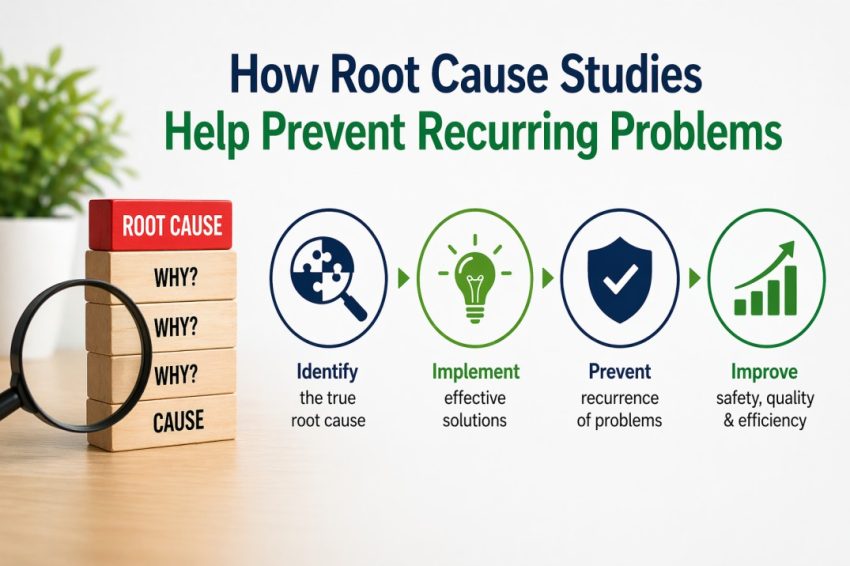
In any organization, recurring problems can disrupt operations, reduce efficiency, and increase costs. While quick fixes may provide temporary relief, they often fail to address the underlying issue. This is where Root Cause Studies become essential. By identifying and addressing the fundamental reason behind a problem, businesses can implement long-term solutions and avoid repeated setbacks.
Understanding Root Cause Studies
Root Cause Studies are organized process through which the main cause of a problem is identified instead of merely treating the symptoms of the problem. Such studies are not based on the question of “What went wrong?”, but “Why did it go wrong?” This is a further level of analysis that assists organizations in discovering obscured problems in processes, systems or human behavior.
The teams can trace the problems to their origins systematically using such techniques as the “5 WHYs” or fishbone diagrams. This makes sure that the corrective actions are effective and meaningful.
Eliminating the Source of Problems
Eradication of the problems at their origin is one of the greatest benefits of Root Cause Studies. When organizations only address surface-level issues, the same problems tend to reappear over time. Nonetheless, when the root cause is established, the businesses will be able to provide specific solutions that will ensure the same will not happen again.
For example, where a manufacturing defect is caused by a failure in the machinery, a simple repair of the defective items will not help the problem. A root cause strategy would determine the fault of the equipment and make sure that it is well maintained or changed thus avoiding future defects.
Improving Decision-Making and Processes
The other main advantage of the Root Cause Studies is enhanced decision-making. Leaders need to know the real reason behind a problem so that they can make well-informed decisions that can improve operational effectiveness. This results in improved allocation of resources, streamlined work processes and minimized downtime.
Moreover, such studies tend to point to gaps in the current processes. By filling these gaps, organizations will be able to make their systems stronger and design more robust operations.
Enhancing Team Collaboration
Root Cause Studies are usually conducted in cross-functional teams which combines diverse views and skills. This team-based method not only enhances the quality of the analysis but also enhances a sense of responsibility and constant improvement.
Employees will be more proactive in the prevention of problems when they are engaged in the problem identification and solving process. This teamwork will minimize the likelihood of having repeated issues and instill a problem-solving attitude throughout the company.
Supporting Continuous Improvement
One of the aims of a successful organization is continuous improvement. Root Cause Studies are very crucial in attaining this as they offer useful tips on the repetitive issues. Both analyses lead to a better understanding of the processes and the establishment of a knowledge base to solve problems in the future.
In the long term, this will result in a reduction in disruptions, improved quality, and customer satisfaction. Companies that regularly apply Root Cause Studies are more prepared to adjust to transformations and are more successful in the long run.
Conclusion
Recurring problems can be costly and frustrating, yet they can be avoided with the appropriate approach. Root Cause Studies help the organizations to develop long-lasting solutions by taking into account the root causes instead of short-term problems. They enhance decision making, strengthen processes and promote collaboration, which eventually ensures that the same problems do not re-occur. Adopting this approach is one of the strategic moves towards efficiency, reliability and sustainable growth.
Also Read: How Overloading Affects Cable Current Carrying Capacity and Safety