
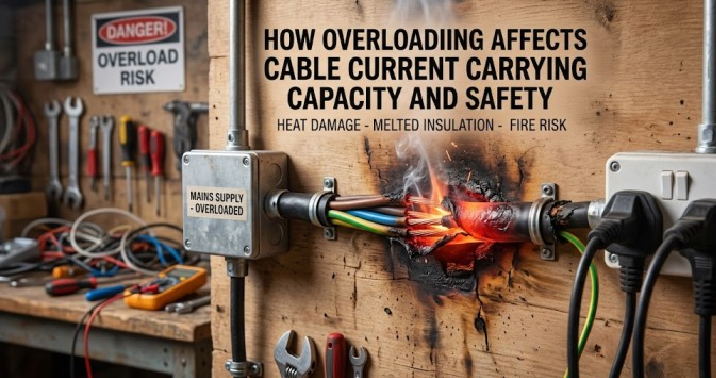
In any electrical system, understanding the limits of a cable is essential for ensuring both performance and safety. One of the most critical factors to consider is the Cable Current Carrying Capacity, which refers to the maximum amount of electrical current a cable can safely handle without overheating. When this limit is exceeded, it leads to overloading—one of the most common causes of electrical failures and hazards.
What is Cable Overloading?
Cable overloading occurs when the electrical current flowing through a cable surpasses its designed capacity. Every cable is manufactured with a specific Cable Current Carrying Capacity, based on factors such as conductor size, insulation type, ambient temperature, and installation conditions. Ignoring these limits can result in excessive heat buildup, which gradually damages the cable and surrounding components.
Impact on Cable Performance
The overloading has a direct impact on the efficiency and life of electrical cables. Beyond the Cable Current Carrying Capacity set limit, the conductor starts to heat out of safe limits. This rise in temperature also results in an increase in electrical resistance resulting in more energy loss and lower efficiency of the system. The result of this overheating cycle is that the insulation of the cable may become brittle over time, and it may easily crack.
Safety Risks of Overloading
The safety aspect of overloading cannot be underemphasized. Higher than Cable Current Carrying Capacity may lead to insulation breakdown, short and even electrical fire. In the industrial and business world, these accidents may cause expensive downtime, damage to equipment, and even injuries to workers. Sizing of cables and management of loads are therefore important in ensuring safe working environment.
Factors That Worsen Overloading
There are a number of external conditions that may increase the overloading risks. Poor ventilation, high ambient temperatures and multiple cables bundling may decrease the effective Cable Current Carrying Capacity. Also, poor quality of materials or improper installation methods may also reduce the capacity of a cable to safely carry electrical loads. These risks can be reduced by regular inspection and compliance with industry standards.
Preventing Cable Overloading
Avoiding overloading starts with the selection of the correct cable to be used in the application. Technicians and engineers should precisely estimate the requirements of the loads and select the cables with a sufficient Cable Current Carrying Capacity. The use of protective equipment like circuit breakers and fuses would also be important in limiting the flow of current. Regular upkeep, load checks, and thermal evaluation may also be used to make sure that cables are working within acceptable range.
Conclusion
Overloading is a problem that can be avoided but its consequences may be very serious. Awareness and respecting the Cable Current Carrying Capacity will help businesses and homeowners to have an efficient running of their electrical systems, increase the life cycle of their electrical systems and most importantly, keep themselves safe. The secret of preventing the hazards of cable overloading lies in investing properly in designing and using high-quality materials and frequent maintenance.
Also Read: Importance of Data Accuracy in Fault Tree Analysis