
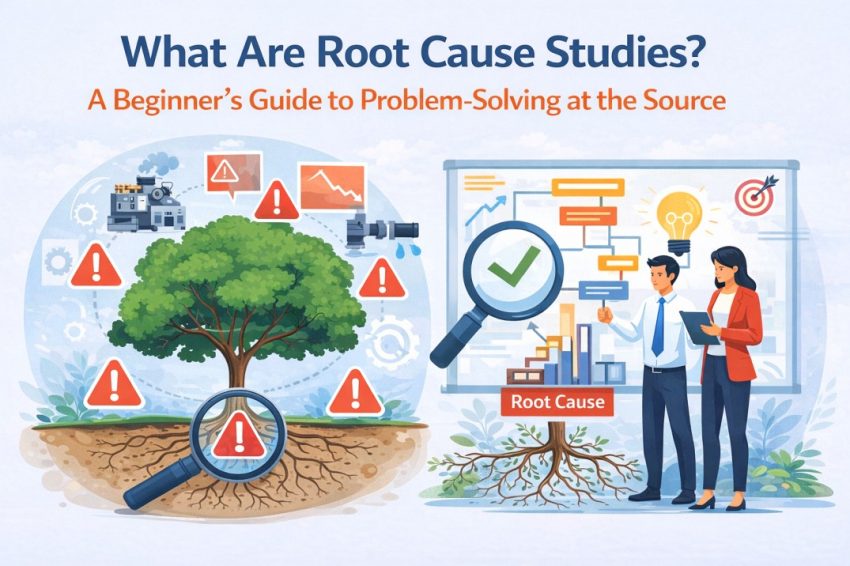
In any organization, problems are inevitable. Errors happen, processes fail, and outcomes don’t always meet expectations. The real challenge is not fixing the surface issue but understanding why it happened in the first place. This is where root cause studies play a critical role. They help individuals and organizations move beyond quick fixes and focus on long-term, sustainable solutions.
Understanding the Concept of Root Cause Studies
Root cause studies are fundamentally a systematic methodology of finding the root cause of a problem or failure. Rather than posing the question what went wrong? They promote the investigation by asking “why did it go wrong?” until the actual cause of the problem is revealed. The goal is to deal with the root cause of the problem and to prevent its reoccurrence in the future rather than curing the symptoms that may appear again later.
These studies are widely used across industries such as healthcare, manufacturing, IT, aviation, and quality management. This approach ensures learning and improvement instead of blaming, regardless of whether it is an incident of patient safety, a manufacturing defect or a delay in provision of a service.
Why Root Cause Studies Matter
It should also be noted that root cause studies help to avoid repetitive issues which is, in fact, one of the greatest benefits of the process. The same problems are likely to reoccur when the organizations use temporary solutions, wasting time, money, and resources. The recognition of systemic gaps, i.e. lack of training, poor communication, or unclear processes, can enable organizations to make a meaningful change that could enhance overall performance.
Also, this strategy helps to cultivate the culture of openness and constant improvement. Teams are encouraged to analyze processes objectively instead of pointing fingers, which builds trust and accountability.
Common Tools Used in Root Cause Analysis
A number of simple but useful tools support this process. The “5 Whys” technique involves asking “why” multiple times until the underlying cause is revealed. The Fishbone (Ishikawa) diagram is used to classify potential causes under the categories like people, process, equipment, and environment. Flowcharts and timelines can also be used to visualize the way events occurred.
Such tools simplify understanding of root cause studies even for the beginners and make the process of analysis logical and evidence based.
How to Conduct Root Cause Studies Step by Step
First, it is necessary to state what the problem is and to collect all the factual information. The second step is to analyze the series of events and identify the factors. Go down to the root cause with the help of the right tools. After identifying, come up with the corrective and preventive measures that would be a direct response to the cause. Lastly, keep an eye on the outcome to make sure that the solution is viable and long-term.
Conclusion
For beginners, learning root cause studies is a valuable step toward smarter problem-solving. This model will enable people and organizations to correct problems at the root, instead of solving the same problems over and over again. However, with time, consistent use of root cause studies results in enhanced outcomes, superior systems, and a learning-oriented culture rather than firefighting.
Also Read: Protection Relay Coordination Study: A Preventive Measure Against Blackouts