


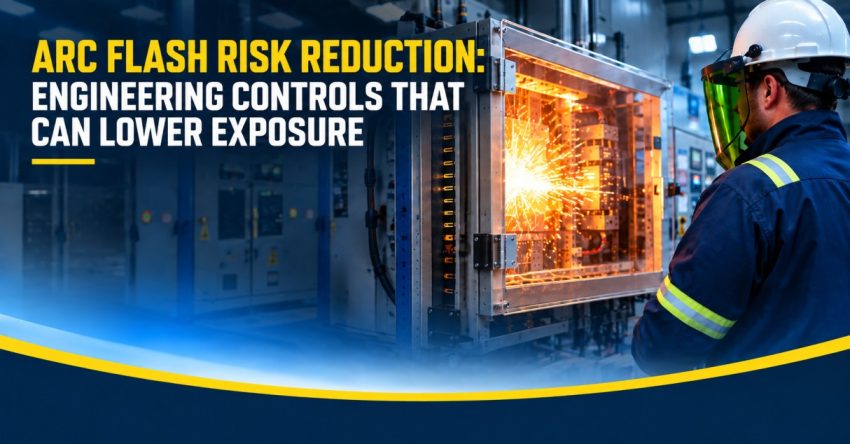
An ARC flash is an electrical safety issue that may occur in case there is an inadvertent electrical connection between conductors that form an electric arc in the air. In such situations, the heat, pressure, light, and molten materials created by the electric arc may pose great hazards for those operating or working nearby. However, for industry facilities, arc flash mitigation is not limited to the use of personal protective equipment.
Start With an Arc Flash Assessment
Risk mitigation starts with the knowledge of the electrical system. An ARC flash hazard analysis will provide information regarding things such as fault current, protective device parameters, equipment setup, and clearing time. Such an evaluation will help engineers to determine which equipment and where further mitigation may be required.
System data is important for a number of reasons. One of these is the fact that a change in any equipment, such as transformers, generators, motors, switchgear, and protective devices, can affect fault current and the operation of the protective devices.
Improve Fault Clearing Performance
The timing involved in interrupting a fault by the protective devices could contribute to the level of incident energy. The shorter the time taken to interrupt a fault, the lesser the amount of time the personnel would be exposed to the arc flash.
The engineers can analyze the circuit breakers, relays, fuses and their settings to ensure that the protective system is properly responding to the electrical system. Coordination should be taken into consideration since adjusting the protective settings only to interrupt faster could affect the coordination of other parts of the system.
The goal is to come up with a protection strategy that will achieve all these.
Use Appropriate Engineering Controls
There are a number of engineering controls that could potentially reduce arc flash hazards, based upon the equipment and operations involved. Examples of such measures could include current limiting devices, arc resistant equipment, and remote switching or racking systems.
Remote operation is useful in some situations, in that personnel can operate equipment from a distance outside the arc flash boundary. Arc resistant switchgear could be designed to contain the arc flash and direct the energy away from personnel, when installed and operated properly.
Engineering assessment will determine which measures to take.
Consider System Changes and Maintenance
Electrical systems are usually dynamic, and the addition of new loads, generating sources, replacement of transformers and alterations in the manner of distribution can influence the short circuit values and the functioning of the protective equipment.
The ARC flash study must be conducted during the engineering analysis in case there are plans for major changes in the installation. Maintenance is also an important task since the protective equipment has to function correctly when a fault happens.
Combine Engineering and Administrative Measures
Engineering controls play a key role in ARC flash risk reduction but are used in tandem with other safety precautions. Electrical safe work procedures, proper training, equipment labeling, access controls, and correct selection of PPE still matter in reducing total exposures.
Using a system approach makes it possible for organizations to deal with risks from different angles and not relying on one protective method.
Building a Safer Electrical System
The risk reduction process for ARC flash need to start by analyzing how the electrical system is going to perform during fault conditions. Engineering control methods such as better protection, rapid fault clearance, remote operation and proper equipment design could be applied to mitigate incident energy or exposure for certain applications.
When talking about industrial facilities, the most suitable strategy will depend on electrical system characteristics and results of the properly performed engineering assessment.
Frequently Asked Questions
Also Read: The Role of Power, Performance and Area in Custom ASIC Design Services