


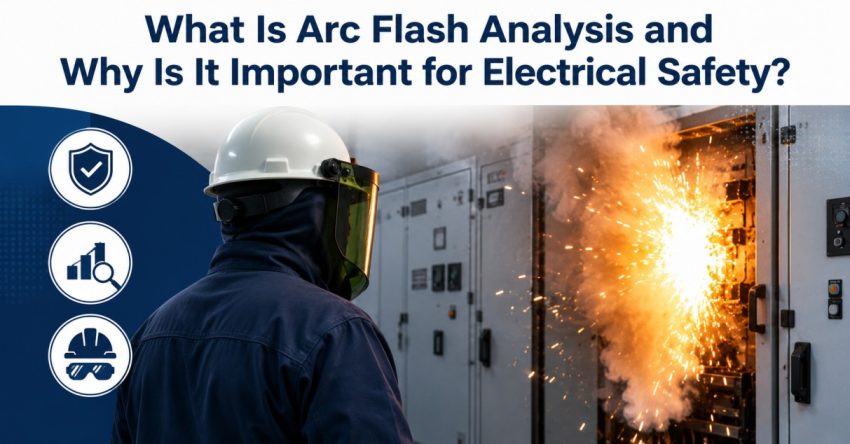
Industries, commercial buildings, healthcare and manufacturing units all rely on electrical systems to function. These systems may keep operations going but can also pose a danger of critical injury or monetary loss if not maintained. Arc flash is one of the most important electrical hazards. This hazard can be identified and thoroughly evaluated, leading to a safer working environment and meeting industry standards.
Understanding Arc Flash
An ARC Flash is a sudden discharge of electrical energy, which occurs when there is an unintended electrical arc between conductors, or a conductor to the ground. The event produces high temperatures, intense light, pressure waves and molten metal particles that can be extremely harmful to humans, resulting in serious burns, noise damage or even death. Common places for an arc flash incident to happen when a fault occurs are on the equipment include switchboards, control panels, transformers, and circuit breakers.
It only takes a small electrical failure to unleash temperatures higher than anything hot off the surface of the sun—and prevention is a must in any facility with medium or low-voltage electric systems.
So what is Arc Flash Analysis?
An arc flash analysis is a systematic approach used to determine the hazards of electrical equipment. The electrical distribution system, fault current, protective devices and equipment configuration are assessed to obtain an estimate of the amount of incident energy to which the worker may be exposed during maintenance or operation.
The analysis will inform them about:
- Energy of incidents to different points of electrical panels.
- Safe working distances for personnel.
- Industry appropriate Personal Protective Equipment (PPE) requirements.
- Proper labeling of electrical equipment warnings.
- Recommendations to minimize Electrical Hazards
This study can add to the information provided to an organisation to make it a safer working place and minimise the risk of accidents occurring in the workplace.
Why Arc Flash Analysis has become so important?
An arc flash analysis is primarily designed to keep human life safe from those who are in the vicinity of energized electrical equipment. Knowing the areas of risk allows organisations to enhance safety processes and minimise staff exposure to dangerous electrical situations.
Another key advantage is that they are also compliant with regulatory standards. Employers are responsible for assessing electrical hazards and taking appropriate steps, as mandated by many safety rules. Regular assessments show that an organization cares about the safety of their employees and responsible facility management.
The analysis also provides a reduction in equipment damage. Expensive equipment can be ruined by electrical faults which can cause extended downtime and pricey repairs. Businesses can take proactive measures to prevent electrical system failures by pinpointing the weak spots.
Long-Term Benefits for Businesses
Investing in electrical safety is more than just about complying with the law. A detailed hazard analysis can be used to enhance operational reliability, lower maintenance risks and avoid unnecessary shutdowns.
Other advantages of an organization are:
- Greater confidence and safety awareness of workers.
- Better maintenance planning.
- Lower accident-related costs.
- Better lifespan for equipment.
- Reduced production interruptions.
Regular reviews are particularly necessary when electrical systems are expanded, modified or upgraded, since changes to the system may affect fault levels and protective device coordination.
Conclusion
At any facility that has extensive power distribution, electrical risks cannot be ignored. Arc Flash Analysis performed by a professional helps in identifying risks before they turn into dangerous occurrences. Moreover, the analysis enable companies to keep their workers safe, avoid disruptions in their operations, and keep from losing important equipment.
Arc Flash Analysis is an extension of all the comprehensive surveys and analysis of electrical systems used in commercial facilities and conduct risk assessment according to industry standards in order to help businesses create a safer and reliable electrical system.
Also Read: How Electronic Products Manufacturing Companies Meet Global Compliance and Safety Standards