
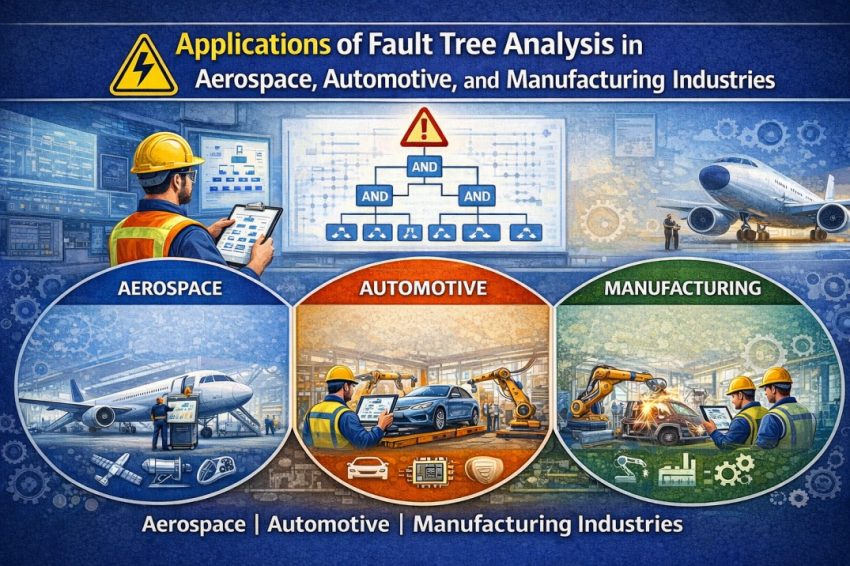
Modern industries rely heavily on advanced systems and complex technologies, making safety and reliability critical operational priorities. Fault Tree Analysis is a structured and systematic technique used to identify potential failures within systems and evaluate the causes behind them. By breaking down failures into smaller contributing factors, industries can develop preventive strategies, improve system performance, and ensure compliance with safety standards. Aerospace, automotive, and manufacturing sectors widely use this method to maintain operational efficiency and minimize risks.
Aerospace Industry
Safety and precision are most important requirements of the aerospace industry as the aircraft system is complex, and the failures of the systems can have severe outcomes. Fault Tree Analysis is an engineering technique that is applied to investigate potential flight control system, navigation equipment, and propulsion systems failures. The method of analysis assists in detecting weak elements, design weaknesses, and operational risks before they cause any critical failures.
The engineering discipline uses it in the design and maintenance of aircraft to determine the reliability and ensure that the maintenance meets high regulatory standards established by the aviation agencies. It also contributes hugely into the space exploration projects, where failure of systems can lead to huge losses in terms of finance and operation. Assessing the combinations of potential failures, aerospace specialists have the chance to increase the reliability of a system and achieve more effective safety performance.
Automotive Industry
The automotive industry continuously integrates advanced electronics, automation, and safety technologies into modern vehicles. The Fault Tree Analysis assists the automotive engineers to assess the performance of braking systems, engine control units, airbags, and advanced driver-assistance systems in terms of reliability. As cars are becoming more technologically advanced, locating possible faults has never been as significant as it is present.
This approach is employed by automotive manufacturers in the process of developing a product to study the resultant impact of component failures on the overall vehicle performance. It can aid the process of designing safer vehicles since it assists the engineers in applying proper preventive mechanisms. It also helps to solve the safety compliance requirements and enhance the customer satisfaction by minimizing the risks of failure of a system. This systematic study can aid the manufacturers to pinpoint the underlying causes of failures and develop more reliable automotive systems.
Manufacturing Industry
The manufacturing sites are equipped with advanced machines, automated production lines and interdependent systems. The Fault Tree Analysis is popular in calculating the possible danger in case of equipment breakdown, manufacturing miscellany, and safety risks. The manufacturers can adopt preventive maintenance process and maximize efficiency by determining the potential causes of system failures.
In process manufacturing industries like heavy engineering and chemical manufacturing, safety is a big issue. This method of analysis is useful in citing the hazards that may cause the equipment to be damaged, environmental hazards or injuries to workers. It also aids in quality assurance as it detects production defects as well as process failures. The adoption of this structured evaluation method benefits manufacturers with reliability of their systems, decrease in cost of running their operations and increased safety in the workplace.
Conclusion
As industries continue to adopt advanced technologies and automation, ensuring system reliability has become increasingly important. Fault Tree Analysis offers a rational and methodical way of determining the possible failures and enhancing the overall system safety. Its use in aerospace, automotive, and manufacturing sectors has shown that it can be used to reduce risks, enhance the quality of products, and also to increase the efficiency of the operation. With the introduction of this analytical approach, the organizations will be able to enhance the safety aspects, as well as gain the long-term stability of the complex industrial system.
Also Read: How Often Should an Arc Flash Study Be Updated? Codes, Standards, and Best Practices