


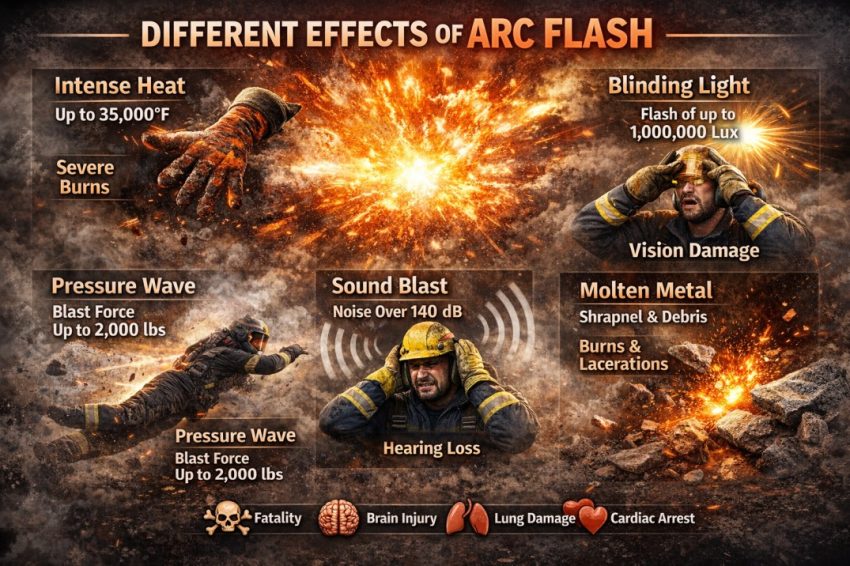
Electrical systems are essential for powering modern industries, buildings, and infrastructure. However, working with electrical equipment also involves certain risks, one of the most dangerous being an Arc Flash. This phenomenon occurs when an electrical current suddenly travels through the air between conductors or from a conductor to the ground, releasing a massive amount of energy in a very short time. An Arc Flash incident can produce several hazardous effects that pose serious threats to workers and equipment. Understanding these effects is important for improving safety and preventing severe injuries in electrical environments.
Intense Radiant Heat
The heat that is emitted by Arc Flash is so strong that it can be regarded as one of the most destructive effects of Arc Flash. In such a process, the temperature may go very high, at times up to 19,000°C. This type of heat can cause serious burns in a few minutes and set fire to the clothing or other materials around it. Employees who are in proximity to the electrical source are likely to experience severe thermal harm although not in direct contact with the electrical equipment. The extreme heat has the potential to destroy the adjacent infrastructure, cables and protective devices causing expensive maintenance and downtimes.
Molten Metal Shrapnel
Molten metal is also another hazardous effect of an Arc Flash. The high temperature generated during the fault can immediately vaporize copper, aluminum or other metals contained in electrical equipment. As these metals melt and spurt out they are in the form of molten metal droplets or shrapnel, which have high speed. These particles are capable of doing serious burns, puncture wounds, and harming of protective equipment. Molten metal may also in most occasions trigger flammable substances in the immediate environment, which worsens the level of the incident and poses more safety threats.
Pressure Waves (Blast)
The powerful pressure wave that is usually present in an Arc Flash event is arc blast. This explosion is formed by a blasting out of the high heat of the surrounding air and the quickly sprayed metal of the electrical fault. The pressure wave thus generated can be intense that it throws the workers in a room or even knocks them off ladders and platforms. Other than physical injuries when the force of the blast causes them, the pressure may also cause damage to nearby equipment, doors and structural elements. Another complication of the electrical accidents is the abruptness of the blast.
Toxic Fumes
When electrical insulation, metals, and other substances are burning during an Arc Flash, they may cause harmful fumes and gases. These gases can be poisonous and can result in respiratory and health problems in the long run in case they are inhaled. The concentration of these gases in a small area like control rooms or electrical panels can easily threaten human life. Employees facing such fumes might suffer breathing problems, dizziness, or irritation in the eyes, and it is more difficult to respond immediately and take some distance to get out of the danger.
High-Intensity Sound
The other important impact of Arc Flash is the high intensity sound generated in the occurrence. The quick outburst of energy and force may produce a sound blast which can be comparing to an explosion. This noise is high-intensity and may harm the hearing as soon as it occurs and may cause temporary or permanent hearing loss. The sound may also create a shock and a disorientation that makes the workers not be able to react appropriately in the event of an emergency.
Conclusion
The consequences of Arc Flash are much more extensive than an electrical fault. All of these effects may result in serious damage to workers and equipment, even from radiant heat of intense intensity, molten metal shrapnel, pressure waves, toxic fumes, and high-intensity sound. Knowledge about these hazards can assist the organizations to have better precautions, protective equipment, and training programs to reduce the dangers of electrical systems.
Also Read: 5 Steps of Safety under Safety Assessment