


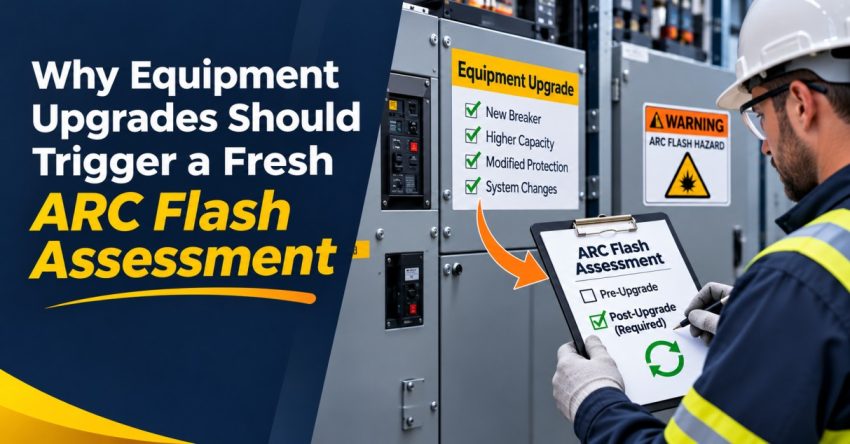
In most industrial environments electrical systems will often be upgraded. This could involve replacing transformers, circuit breakers, upgrading distribution board or adding more electrical loads. Although this can improve capacity and increase efficiency it can also change the electrical characteristics of the system. When upgrading electrical equipment you must consider if this will affect electrical safety within the workplace. Performing an ARC Flash Assessment will help identify any possible dangers and should be reviewed if there are any major changes to your electrical system.
How Electrical Upgrades can Impact ARC Flash Risk
An ARC flash occurs when an electrical fault causes unwanted energy to arc. This can cause serious injury and damage electrical equipment due to the high temperatures, pressure and bright light produced.
Upgrading equipment can have an impact on the circumstances of an ARC flash. Adding a larger transformer can increase the short circuit current available. Replacing protection or changing the circuit breaker settings can also affect how fast the fault is cleared.
This can increase/decrease how much incident energy is produced during an electrical arc. If the assessment was performed several years ago this might not reflect the current risk.
Situations Where a New ARC Flash Assessment is Required
Not all small electrical modifications will require a full reassessment. However, there are instances where changes can cause significant change to the fault profiles of the system and can impact on protection.
Important instances include:
Transformer changes – If a new transformer has been fitted with a different rating and impedance it can affect the amount of available fault current.
Circuit breaker changes – If new circuit breakers are introduced they may have different operating and interruption ratings. This can affect how fast faults will clear.
Electrical panel changes – New feeders, busbar configurations or distribution panels can impact on the overall performance of the system.
New generation of power sources – Installing new generators, solar or alternate supply can impact on fault current.
Changes to protection relay settings – Changing relay settings can impact on the speed of protection devices.
Why Existing ARC Flash Labels may no longer be Accurate
ARC Flash labels are used to display vital information such as the incident energy level, working distance and other relevant information. These are generally based on the current configuration and operating conditions of the electrical system.
If equipment is upgraded without looking at the existing study, this information will no longer be accurate. This can cause confusion when undertaking electrical maintenance and put staff at risk.
By conducting a new assessment, organisations can be confident if their labels, protection requirements and electrical safety requirements need updating.
Engineering Studies
To ensure a reliable ARC Flash assessment is carried out, the most up to date electrical information will need to be considered. This includes short circuit calculations, protection devices characteristics and co-ordination. Engineers can assess potential incident energies and identify areas for improvement.
Based on the findings organisations may want to consider increasing the speed of protection, changing relay settings, adding current limiting devices or other engineering controls.
Conclusion
Upgrading equipment should not just be seen as a way to increase the capacity or performance but can also impact on the risk profile of your whole power distribution network. By reviewing your ARC Flash assessments following major electrical changes, organisations can be confident they have accurate hazard information, can assess protection and improve safety within the workplace. By making this part of your equipment upgrade process, you can avoid incorrect assumptions about the safety of your equipment impacting on important maintenance and operational decisions.
Also Read: PCB Design: When “Perfectly Routed” Doesn’t Mean “Perfectly Working”